The group saw an exceptionally productive week, with no less than three! papers that were published. Congratulations to Libelje, Jonathan and all co-authors!
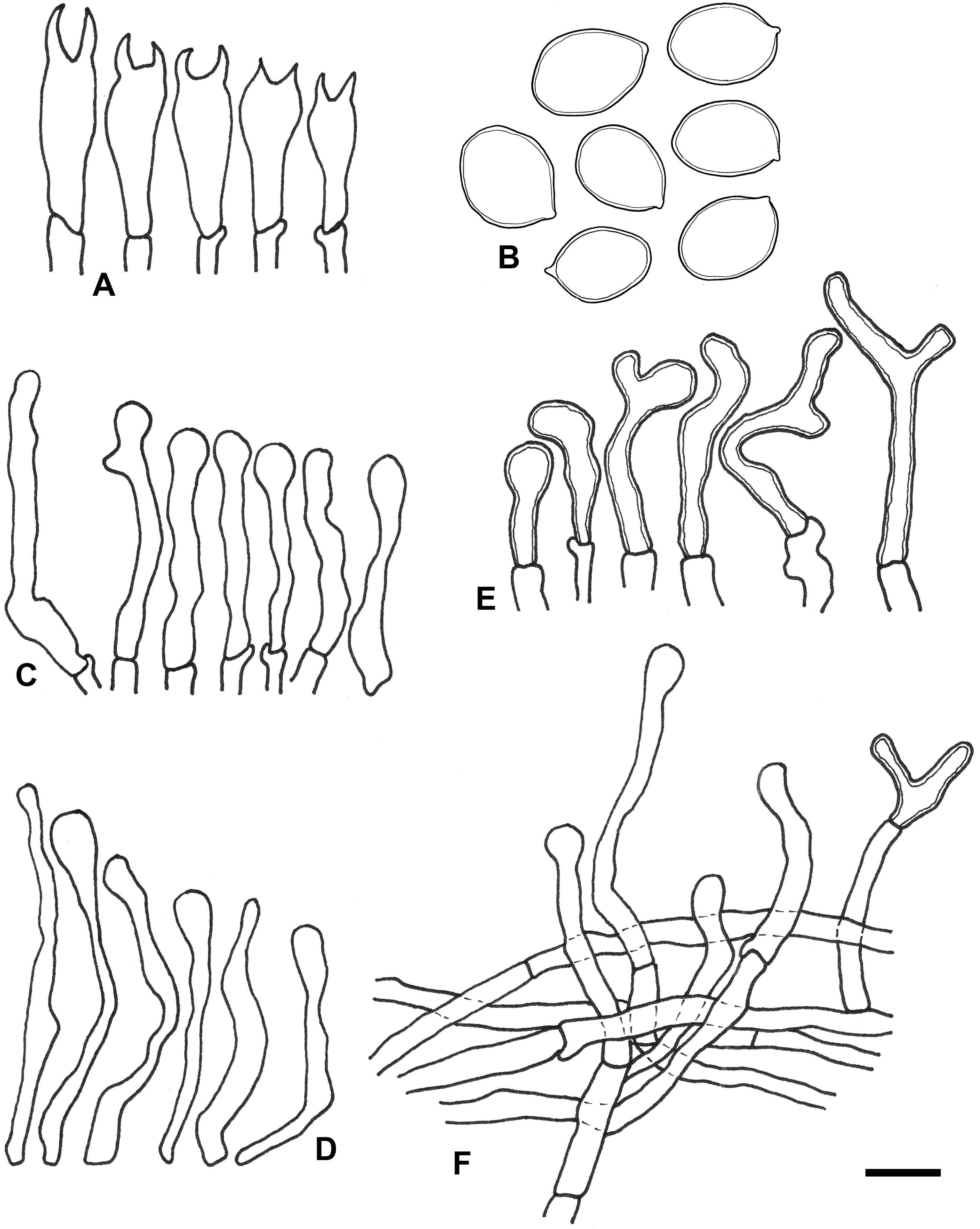
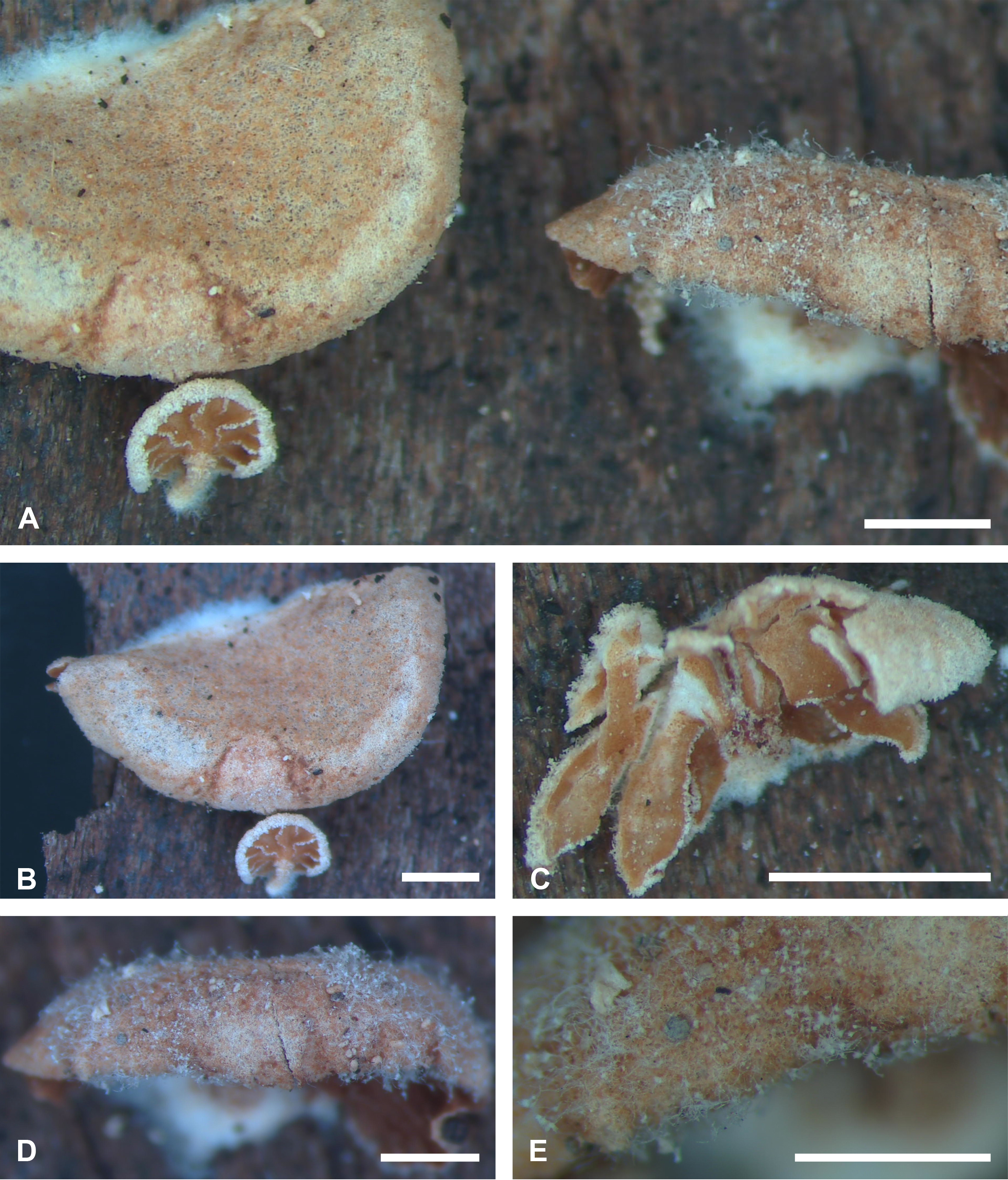
| The first paper is the result of bachelor thesis research. Libelje Mortier, currently a master student in the lab, started in the lab as a bachelor thesis student focusing on the study of a single collection of Simocybe from the Boston Harbor Islands National Recreation Area in Massachusetts. We had already known for a while that this Simocybe was a phylogenetic sister species to an Italian species (S. rhabarbarina) but it was Libelje who studied the morphology in detail, wrote a bachelor thesis about it, and then turned it into a manuscript for Northeastern Naturalist. Reviewers were very positive but asked for a justification to publish this species based on a single collection. Lucky for us, this is a topic we know much about (see paper #2). Mortier L, Haelewaters D, Asselman P, De Lange R, Kuyper TW, Verbeken A. 2024. Simocybe ramosa, a new species from the Boston Harbor Islands National Recreation Area. Northeastern Naturalist 31(1): 92-109. Published 18 March 2024. https://doi.org/10.1656/045.031.0108 |
| The second paper spearheaded by Jonathan Cazabonne aims to give a sensible answer to the question whether it is poor science to describe singleton-based species (meaning species based on 1 collection, 1 specimen, or 1 isolate). We present pros and cons in this paper in IMA Fungus. The paper serves as a starting point for further discussion by the mycological community in light of the huge Linnean shortfall (difference between number of described species and number of estimated ones). Cazabonne J, Walker AK, Lesven J, Haelewaters D. 2024. Singleton-based species names and fungal rarity: does the number really matter? IMA Fungus 15: 7. Published 20 March 2024. https://doi.org/10.1186/s43008-023-00137-2 |
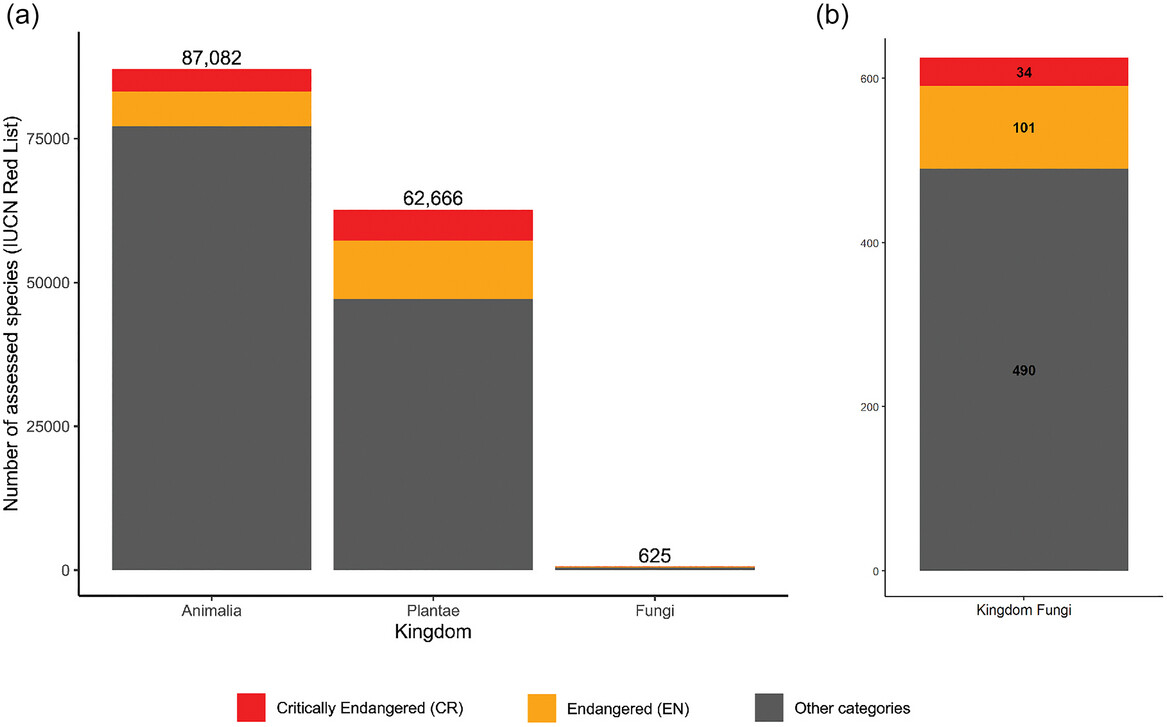
| [22 March 2024] Finally, the third paper – a collaborative effort with 20 authors – explores leveraging citizen science for fungal conservation. We present challenges in dealing with citizen science data, including how to overcome taxonomic and geographic biases, estimating species absences, broadening participation, improving data quality, and translating data into action with multiple stakeholders (the public, policymakers, governments, funding agencies, et cetera). We also call for professional mycologists to engage with citizen scientists to inform IUCN Red List assessments and advance fungal conservation. This paper was inspired by the “Fungal Conservation” symposium at the 2022 Annual Meeting of the MSA in Gainesville, Florida. I am particularly proud of this paper since it came back from review with only praise. Haelewaters D, Quandt CA, Bartrop L, Cazabonne J, Crockatt ME, Cunha SP, De Lange R, Dominici L, Douglas B, Drechsler-Santos ER, Heilmann-Clausen J, Irga PJ, Jakob S, Lofgren L, Martin TE, Muchane MN, Stallman JK, Verbeken A, Walker AK, Gonçalves SC. 2024. The power of citizen science to advance fungal conservation. Conservation Letters. https://doi.org/10.1111/conl.13013 |
 Beetlehangers
Leave a comment