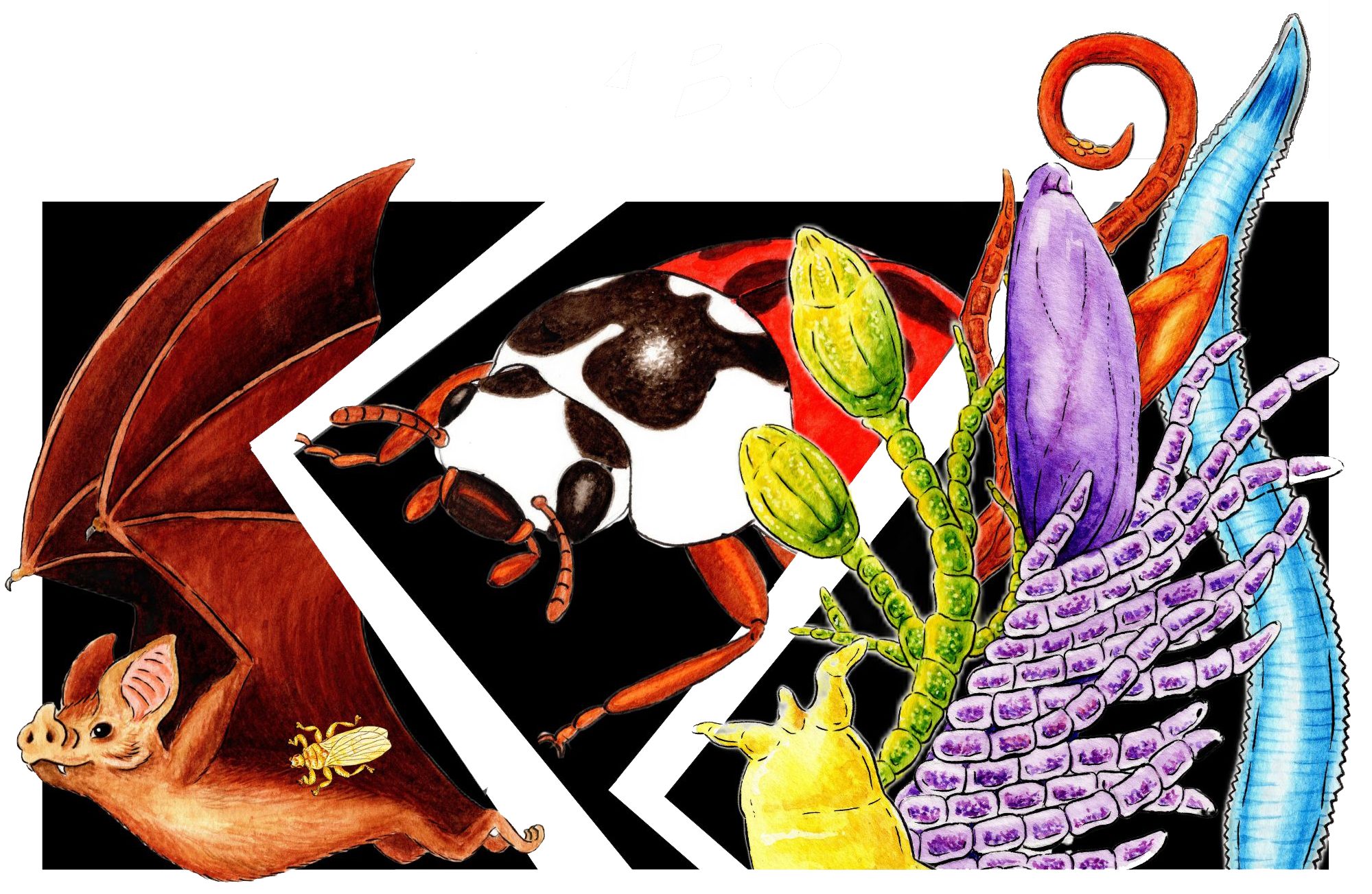

The Ladybird Project
The Harlequin Ladybird
Harmonia axyridis, better known as the harlequin ladybird, was originally designated as a pest control method for local aphid populations in Europe. However, their populations were loosely controlled and have spread across multiple continents over the past 30 years. Now, they outcompete native ladybird populations and hamper food production within the nation.
The Green Beetle Hanger
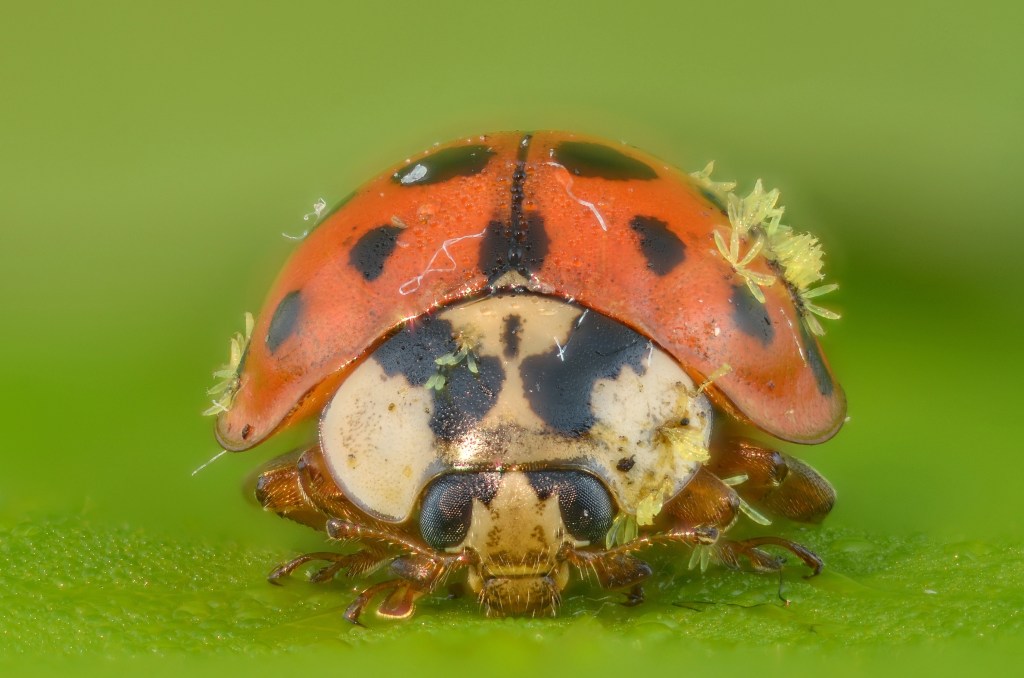
Hesperomyces harmoniae, or the green beetle hanger, is an ectoparasite in the order Laboulbeniales that infects adult ladybirds. Research has recently focused on this parasite due to its discovery on the globally invasive harlequin ladybird Harmonia axyridis and for its potential use in studies of co-evolution and biocontrol. Hesperomyces harmoniae are a common parasite to the harlequin ladybird and infects its hosts by penetrating into their exoskeletons, taking in nutrients from exposed body fluids. We aim to follow the spread of the fungal ectoparasite on invasive ladybirds in Europe.
Photo: Gilles San Martin
The Objective
Wanting to explore the relationship between Harmonia axyridis and Hesperomyces harmoniae, Dr. Danny Haelewaters collected samples and observed the influence that the parasite had on the ladybirds, and determined that there is a negative effect on the survival of ladybirds by the parasitic infection of Hesperomyces. This discovery complemented prior findings that determined that fungal infections decreased mating frequency, winter survival rate, and mobility of ladybirds. This research was the first to explicitly link Hesperomyces infections with increased ladybird mortality, shining a light on this mysterious fungus and its effects.
 Beetlehangers